

From Idea to Published: The Proven Framework That Turns Creative Dreams Into Real Products in Weeks
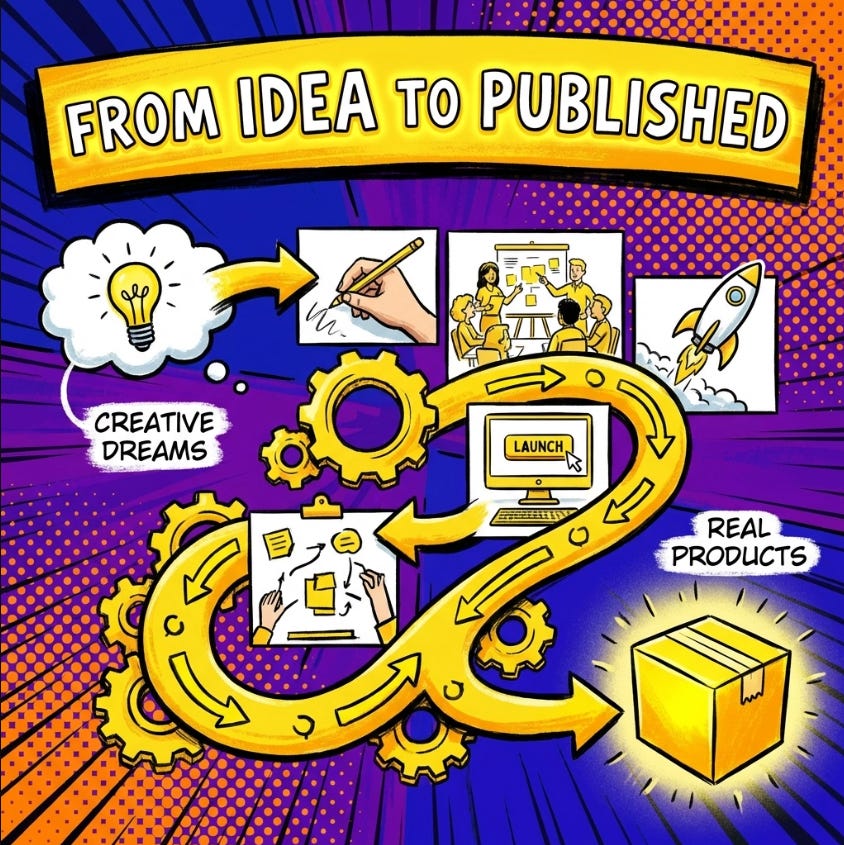
You’ve got that brilliant idea burning in your brain: the comic book series, the indie game, the graphic novel that’s going to change everything. But here’s the brutal truth: most creative dreams die in the “someday” pile, buried under overwhelm, perfectionism, and the crushing weight of not knowing where to start.
What if I told you there’s a proven framework that can take your idea from concept to published product in weeks, not years? That successful creators aren’t just more talented: they’re using a strategic approach that fast-tracks execution while everyone else is still “planning to plan.”
Let me introduce you to the Creative Acceleration Framework: a five-stage system that eliminates the guesswork and gets your creative projects into the world faster than you thought possible.
Why Most Creative Projects Never See Daylight
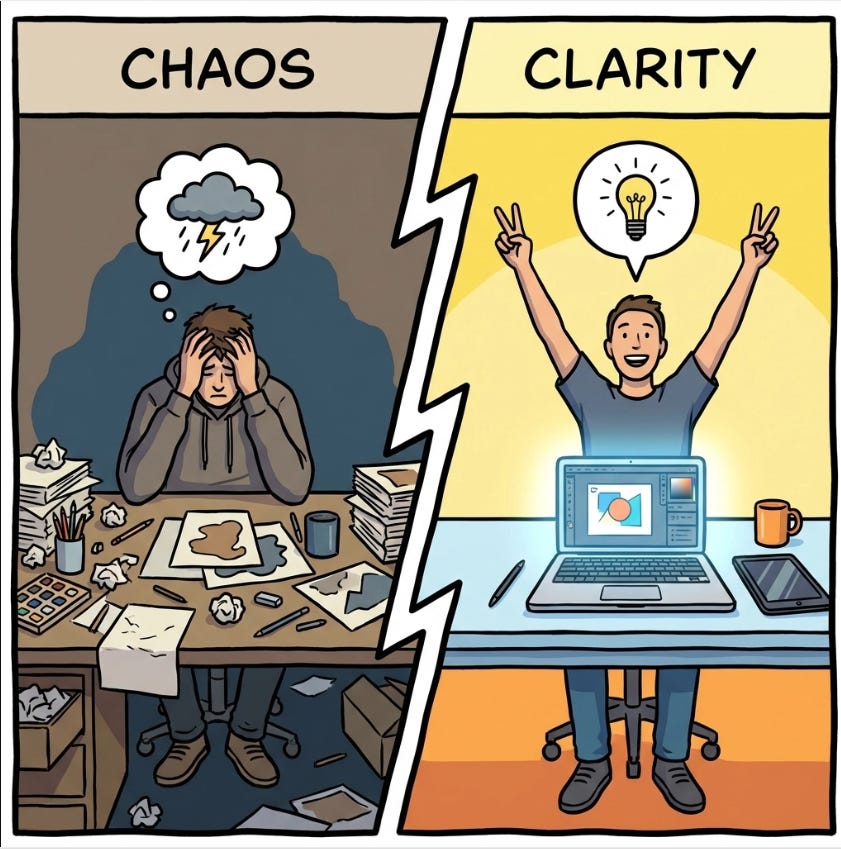
Before we dive into the solution, let’s acknowledge the elephant in the room. You’re not stuck because you lack creativity or talent. You’re stuck because traditional creative advice is broken.
The old model tells you to:
✗ Perfect your idea before starting
✗ Create everything yourself from scratch
✗ Wait for the “perfect” moment to begin
✗ Build everything before getting any feedback
This approach doesn’t just slow you down: it kills projects entirely. The Creative Acceleration Framework flips this script completely.
The Five-Stage Creative Acceleration Framework
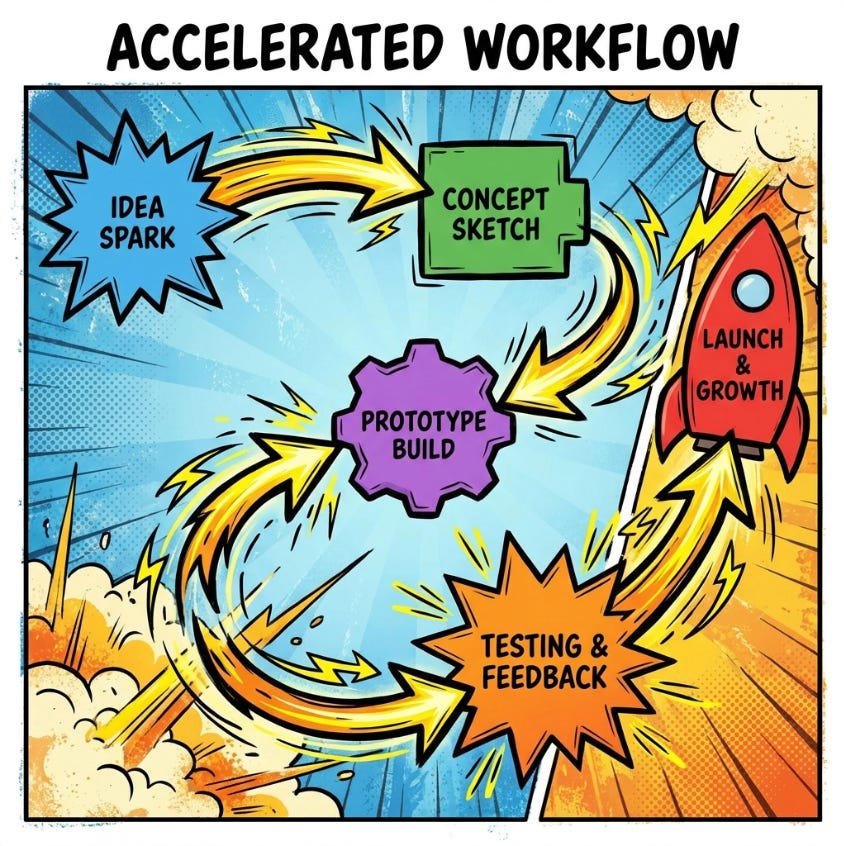
Stage 1: Strategic Clarity (Week 1)
Stop brainstorming. Start strategizing.
Most creators spend months in “idea development” when what they really need is strategic clarity. Here’s how to nail this in days, not months:
Define Your Core Promise
What specific problem does your creative work solve?
Who desperately needs this solution right now?
What makes your approach uniquely valuable?
Apply the SCAMPER Method
Instead of starting from zero, use SCAMPER to refine existing successful concepts:
Substitute: What if your comic was set in space instead of medieval times?
Combine: What happens when you merge two popular genres?
Adapt: How can you apply successful storytelling from other mediums?
Modify: What elements can you amplify or minimize?
Eliminate: What unnecessary complexity can you remove?
Rearrange: How can you restructure the typical format?
Document Your Vision in One Page
Create a simple product vision document that includes:
Core concept (2 sentences max)
Target audience (specific, not “everyone”)
Unique selling point
Success metrics (downloads, sales, engagement)
Stage 2: Rapid Validation (Week 1-2)
Test before you invest.
Here’s where most creators make their biggest mistake: they assume their idea is what people want. Smart creators validate first, build second.
The 48-Hour Validation Sprint
Create a simple landing page describing your concept
Post concept art or mockups on social media
Run targeted polls in relevant communities
Conduct 5-10 quick interviews with potential readers/players
Analyze engagement metrics and feedback patterns
Red Flags That Save You Months:
Zero engagement on concept posts
Feedback focuses on fundamental concept flaws
Target audience says “it’s nice but not for me”
No one asks “when can I get this?”
Green Lights That Signal Go:
People share your concept posts organically
You receive specific questions about features/availability
Audience suggests improvements (not complete overhauls)
Pre-launch interest exceeds your expectations
Stage 3: Smart Prototyping (Week 2-3)
Build fast, learn faster.
Traditional prototyping advice tells you to create detailed mockups. The Creative Acceleration Framework says: create the minimum viable version that proves your concept works.
For Comics and Graphic Novels:
Sketch 3-5 key scenes instead of full pages
Use AI tools to generate background elements quickly
Create character turnarounds with simple poses
Write sample dialogue for crucial story moments
For Games:
Build one core gameplay mechanic perfectly
Create placeholder art that conveys the visual style
Design 2-3 levels that showcase the experience
Test the core loop with friends or online communities
The Prototype Success Formula:
Focus on proving one thing really well rather than everything moderately. Your prototype should answer: “Does the core experience deliver on my promise?”
Stage 4: Accelerated Production (Week 3-6)
Ship fast, iterate faster.
This is where the magic happens. Instead of trying to create everything perfectly from scratch, you’ll leverage modern tools and techniques to accelerate production dramatically.
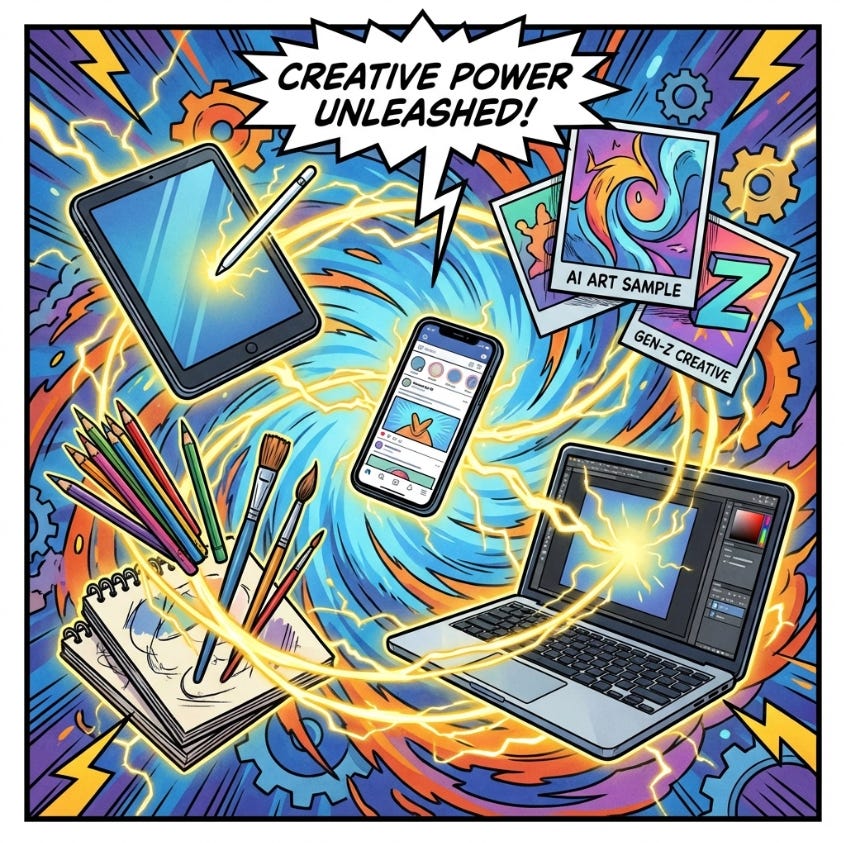
The Modern Creator’s Toolkit:
AI-assisted art generation for backgrounds and concepts
Template-based layouts that speed up page creation
Asset libraries for common elements (effects, textures, fonts)
Automation tools for repetitive tasks
The 80/20 Production Rule:
Focus 80% of your effort on the 20% of elements that create 80% of the impact:
Character expressions and key action scenes (comics)
Core gameplay mechanics and player feedback (games)
Emotional story beats and character development (novels)
Weekly Production Sprints:
Break production into weekly sprints with specific deliverables:
Week 3: Character finalization and style guide
Week 4: Core content creation (first act/levels)
Week 5: Polish and secondary content
Week 6: Final assembly and testing
Stage 5: Launch and Iterate (Week 6-8)
Perfect is the enemy of published.
The final stage isn’t about creating a perfect product: it’s about getting your work into the world and learning from real user feedback.
Soft Launch Strategy:
Release to a small, engaged audience first
Gather specific feedback on user experience
Identify the top 3 issues that need immediate attention
Create a rapid improvement plan
The Post-Launch Acceleration Loop:
Measure: Track engagement, sales, and user feedback
Learn: Identify patterns in user behavior and requests
Improve: Implement changes based on data, not assumptions
Repeat: Continue the cycle with each update/release
Common Framework Killers (And How to Avoid Them)
The Perfectionism Trap
You’ll be tempted to “just fix this one thing” before launching. Set a hard deadline and stick to it. Version 1.0 is about learning, not perfection.The Feature Creep Monster
Your audience will suggest amazing ideas during development. Write them down for version 2.0, but don’t let them derail your current timeline.The Comparison Game
You’ll see other creators’ polished work and feel inadequate. Remember: you’re seeing their final product, not their messy first draft. Stay in your lane.The Isolation Chamber
Working alone for weeks kills momentum and perspective. Share progress regularly, even if it’s not ready for public consumption.
Your Next Steps Start Now
The Creative Acceleration Framework works because it’s based on proven product development principles adapted specifically for creative projects. But frameworks only work if you work them.
Today’s Action Items:
Choose one creative project that’s been stuck in your head
Complete Stage 1’s strategic clarity exercise (30 minutes max)
Set your Week 8 launch deadline and work backward
Share your concept with one trusted person for initial feedback
This Week’s Commitment:
Finish Stages 1 and 2 completely
Document your validation results
Begin Stage 3 prototyping by Friday
The difference between creators who publish consistently and those who don’t isn’t talent: it’s having a system that eliminates the overwhelm and creates clear, actionable steps forward.
Your creative dreams don’t have to stay dreams. With the right framework, they become products that impact real people in real ways.
Ready to accelerate your creative process? I share more frameworks and strategies for overwhelmed creators on Medium, where you’ll find detailed guides for turning creative chaos into consistent output.
The only question left is: what will you publish in the next 8 weeks?


