
The Comic Book Artist's Guide to Getting Paid for Your Art in 2026

Let me be real with you. Making money from art in 2026 looks nothing like it did ten years ago. The industry has shifted. New revenue streams have opened up. And if you are still relying on a single income source, you are leaving money on the table.
This guide covers one piece of a much bigger system I teach inside my Skool community. Think of it as a taste of what creative career building actually looks like when you stop waiting for permission and start treating your art like a business.
Let us get into it.
The Baseline: Page Rates at Major Publishers
If your goal is working for Marvel or DC, here is what you are looking at. Starting pencillers earn roughly 160 dollars per page, with some artists hitting up to 260 dollars depending on the project and their track record. At a steady pace of about one page per day, that is around 3,200 dollars monthly or about 38,400 dollars annually.
Not bad. But here is the catch.
No health insurance. No sick pay. No vacation time. You are a freelancer, not an employee. That 38k needs to stretch further than a traditional salary would.
Other roles pay differently. Inkers typically see 75 to 100 dollars per page. Colorists land somewhere between 20 and 121 dollars. Letterers usually pull in 10 to 25 dollars per page.
Smaller publishers in the direct market? Expect about one-third of those Marvel and DC rates. The exposure can be valuable, but the checks are smaller.
This is why relying on page rates alone is a tough road. You need multiple artist income streams working together.
Original Art Sales: The Hidden Goldmine
Here is something a lot of newer artists miss. When you pencil pages for a publisher, you often get to keep the original artwork after it is inked. Pencillers typically recover about two-thirds of their inked artboards.
Those pages have value. Real value.
At an average of around 100 dollars per page, selling your originals can add 15,000 to 20,000 dollars to your annual income. That bumps a first-year artist from 38k up to around 55,000 dollars.
This is not a side hustle. This is a legitimate revenue stream that most artists underutilize. The key is building relationships with collectors and being consistent about making your work available.
Commissions and Conventions
Conventions are not just for meeting fans. They are for making money from art in a direct, immediate way.
Commission work at cons can bring in serious cash if you price yourself correctly and manage your time. Sketch covers, head shots, full illustrations. Artists with a solid following can pull in thousands over a single weekend.
The trick is efficiency. Know your rates. Know how long each type of commission takes. Do not undersell yourself just to fill a seat.
Between conventions, online commissions keep the income flowing. Platforms like social media and dedicated art sites let you connect with buyers year-round. The artists who thrive treat this like a real business, not a side gig they get to when they feel like it.
Creator-Owned and Self-Publishing
Here is where things get interesting.
Work-for-hire pays the bills. But creator-owned comics and self-publishing offer something page rates never will: ownership.
When you create your own intellectual property, you control the rights. You control the licensing. You control the long-term value.
Crowdfunding platforms like Kickstarter and BackerKit have made self-publishing more accessible than ever. Artists are funding their own graphic novels, building direct relationships with readers, and keeping a much larger slice of the profits.
I have been down this road myself. My books are available on my Books2Read page, and the freedom of owning your work is hard to put a price on.
Self-publishing is not easy. It requires learning new skills. Marketing. Fulfillment. Community building. But the payoff, both financially and creatively, can be massive.
Diversifying Your Income
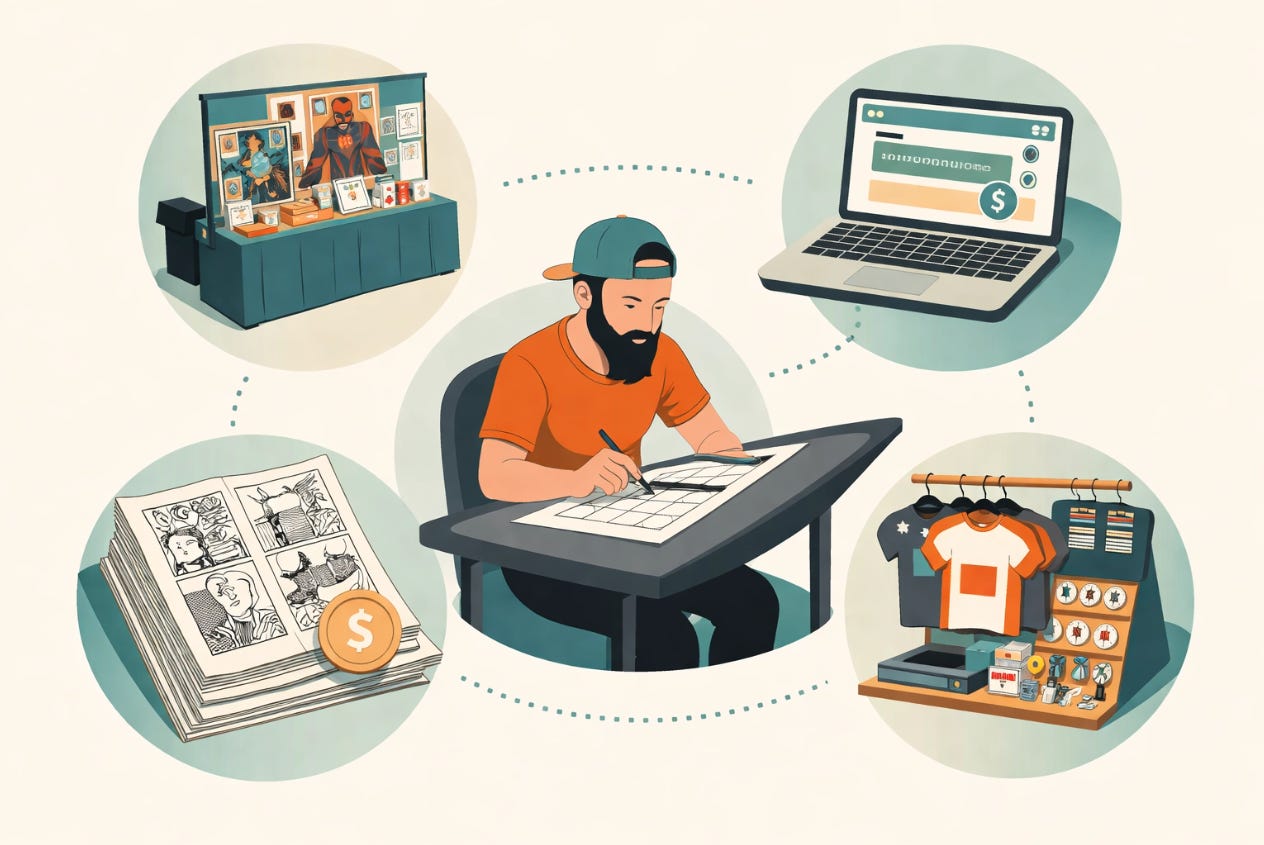
The most successful comic artists in 2026 are not just drawing pages. They are building ecosystems.
Here are a few ways to diversify your artist income streams:
Prints and Merchandise. Turn your art into products. Prints, shirts, stickers, pins. Fans want ways to support you beyond buying the comic itself.
Cover Art. Cover gigs often pay better than interior pages and take less time. Plus, covers get more visibility, which builds your brand.
Teaching and Community. This is a big one. If you have skills and experience, there are people willing to pay to learn from you. Online courses, workshops, Patreon content, community memberships. This is where creative career building really takes off.
Licensing. Your characters and art have value beyond the page. Licensing deals for merchandise, games, or adaptations can generate passive income for years.
The goal is to stop trading hours for dollars and start building assets that work for you.
The Mindset Shift
Here is the thing nobody tells you. Making a living as a comic artist is less about talent and more about strategy.
Talented artists struggle every day because they never learned the business side. Meanwhile, artists with solid but not spectacular skills thrive because they treat their career like a business.
You need to track your income. Set rates that respect your time. Build multiple revenue streams. And constantly look for ways to create value beyond the page.
This is not selling out. This is survival. And honestly, it is freedom.
When your income comes from multiple sources, you are not at the mercy of a single client or publisher. You have leverage. You have options. You have a real career.
What Comes Next
This guide scratches the surface. There is a lot more to unpack when it comes to pricing strategies, building an audience, launching crowdfunding campaigns, and turning your art into a sustainable business.
That is exactly what I teach inside my Skool community. If you want the full roadmap and a group of artists who are all figuring this out together, come join us at Creative Illuminati.
No gatekeeping. No fluff. Just real strategies for making money from art in 2026 and beyond.
See you inside.