

![[HERO] Vintage Comics 101: Building Your Foundation](https://substackcdn.com/image/fetch/$s_!8ZwG!,f_auto,q_auto:good,fl_progressive:steep/https%3A%2F%2Fsubstack-post-media.s3.amazonaws.com%2Fpublic%2Fimages%2Fd1299bfe-84f3-471f-8388-6a9a73170cc3_1536x1024.webp "[HERO] Vintage Comics 101: Building Your Foundation")
So, it’s 2026, and you’ve decided to jump into the world of vintage comic collecting. Welcome to the club. It’s an addiction: the good kind: but it can also be a minefield if you don’t know your Silver Age from your Bronze Age.
The market has changed a lot over the last few years. Prices for “Grails” (those ultra-rare, high-dollar books) are through the roof, and the influx of new collectors means you need to be smarter than the average buyer to build a collection that actually holds its value. Whether you’re looking to own a piece of history or just want to see Spider-Man punch a villain on some high-quality newsprint, this guide is your foundation.
Let’s get into the weeds and make sure you don’t lose your shirt.
Step 1: Define Your Collector Persona
Before you spend a single dime, you need to decide what kind of collector you are. If you try to buy everything, you’ll end up with a disorganized mess of books that are hard to track and even harder to sell later.
The Completionist: You want every issue of a specific run (e.g., The Uncanny X-Men #100 through #300).
The Key Hunter: You only want the “Keys”: first appearances, deaths of major characters, or iconic cover art.
The Character Loyalist: You only collect Batman, no matter the era.
The Artist/Writer Fan: You follow specific legends like Jack Kirby, Steve Ditko, or Todd McFarlane.
My advice for 2026? Start with a mix. Buy a few lower-grade keys of characters you love, and fill in the gaps with clean “common” issues from the same era to get a feel for the paper and the history.
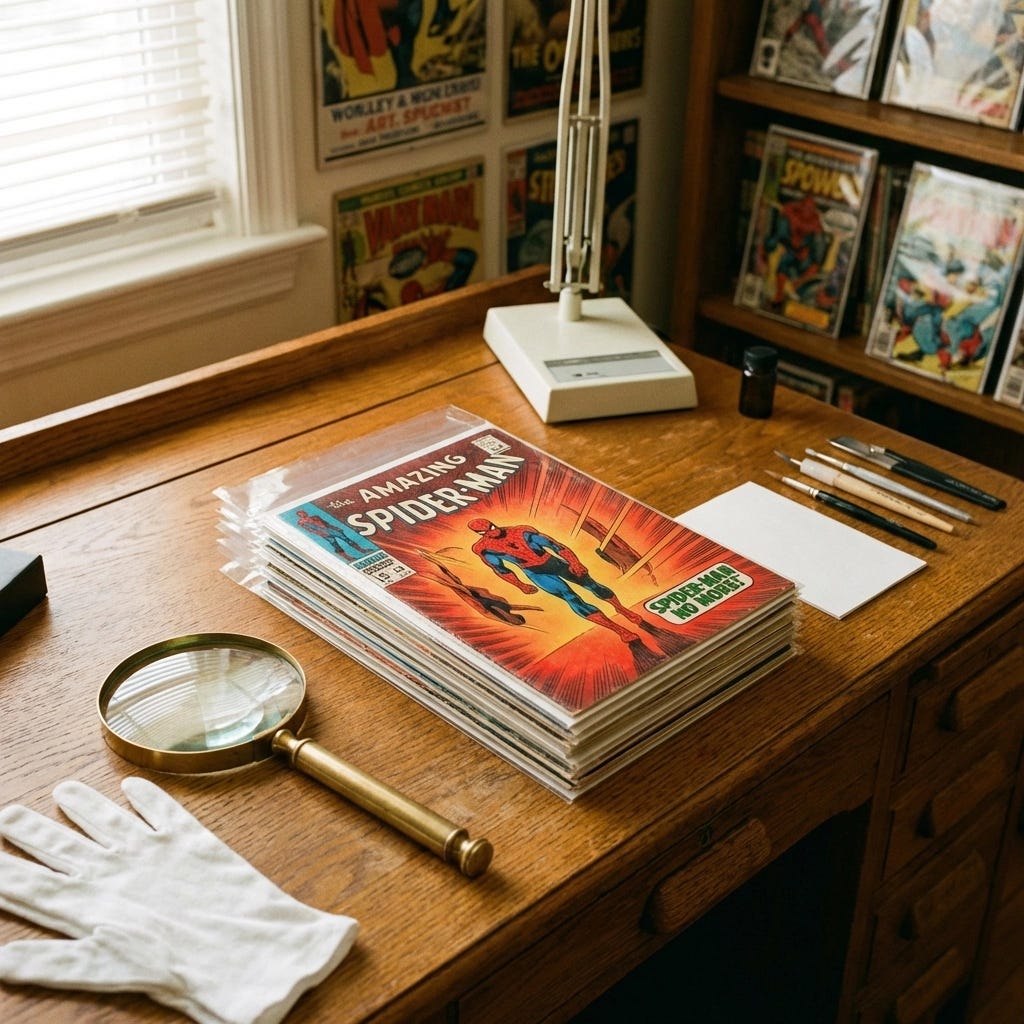
Step 2: Know Your “Ages”
In the comic world, time is measured in Ages. Knowing these is essential because the paper quality, rarity, and value drivers change significantly between them.
The Golden Age (Late 1930s – 1956)
This is where it all started. Think Action Comics #1 and the original Human Torch. These books are rare, fragile, and expensive. Most beginners stay away from Golden Age keys until they have a massive budget, but “non-key” books from this era are still incredible historical artifacts.
The Silver Age (1956 – 1970)
This is the era of the Marvel revolution. Stan Lee, Jack Kirby, and Steve Ditko changed the game. You get the debut of the Fantastic Four, Spider-Man, and the Avengers. These books are the backbone of most serious collections.
Key Indicator: Look for 10-cent and 12-cent cover prices.
The Bronze Age (1970 – 1985)
The stories got darker and more socially relevant. We’re talking the death of Gwen Stacy and the debut of Wolverine. Bronze Age books are currently some of the most sought-after because they are (relatively) more affordable than Silver Age books but still hold massive “cool factor.”
Key Indicator: 15-cent to 75-cent cover prices.
The Copper & Modern Ages (1986 – Present)
The “Modern” tag is broad, but generally, anything from the late 80s onward falls here. This era saw the rise of the “speculator boom.” While there are huge keys here (like Venom or Miles Morales), print runs were much higher, meaning condition is everything.
Step 3: The Big Two : Marvel vs. DC
While there are plenty of amazing independent publishers (Image, IDW, Dark Horse), the vintage market is dominated by the Big Two.
Marvel: Generally holds higher resale value for Silver and Bronze Age keys. The “Marvel Method” of storytelling created a connected universe that collectors still obsess over.
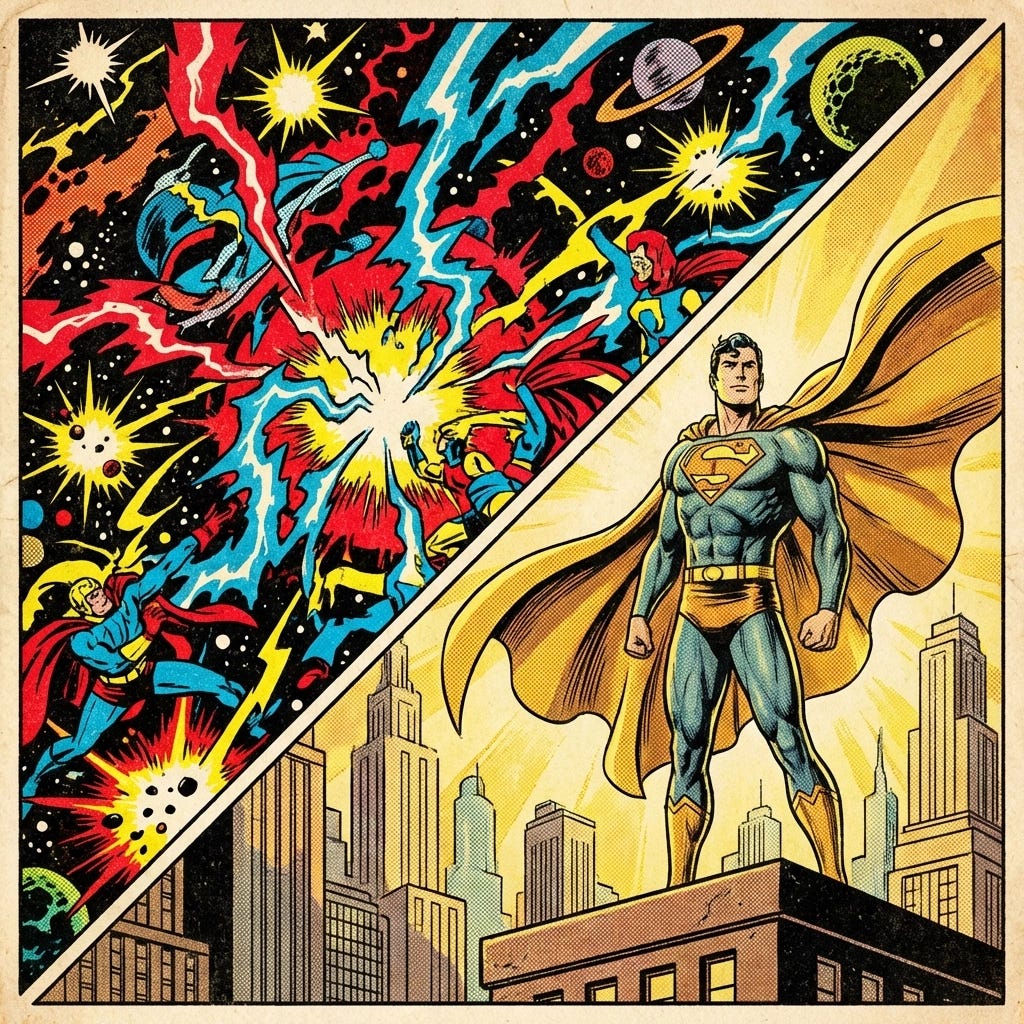
DC: The “Distinguished Competition” owns the Golden Age. If you want the icons: Superman, Batman, Wonder Woman: this is your home. DC’s Silver Age is also highly collectible, though often viewed as more “whimsical” than Marvel’s output.
Step 4: The Utilitarian Checklist for Judging Condition
This is where most beginners get burned. You see a “Spider-Man” book for $100 and think it’s a steal, only to realize later it has a “restored” spine or hidden mold. You don’t need to be a professional grader to spot a lemon. Use this checklist every time you hold a “raw” (un-slabbed) book.
1. Spine Ticks
Hold the book at an angle to the light. Look at the left edge (the spine). Do you see tiny white horizontal lines? Those are “spine ticks.” They happen when the book is opened too wide. A few are fine for a “Very Good” book, but if they break the color of the ink, the grade drops significantly.
2. Color Breaks
Look for any creases on the cover. If you can see white paper showing through the ink, that’s a “color break.” It’s a permanent flaw that prevents the book from ever being a “High Grade” (9.0 or above).
3. Rust Migration
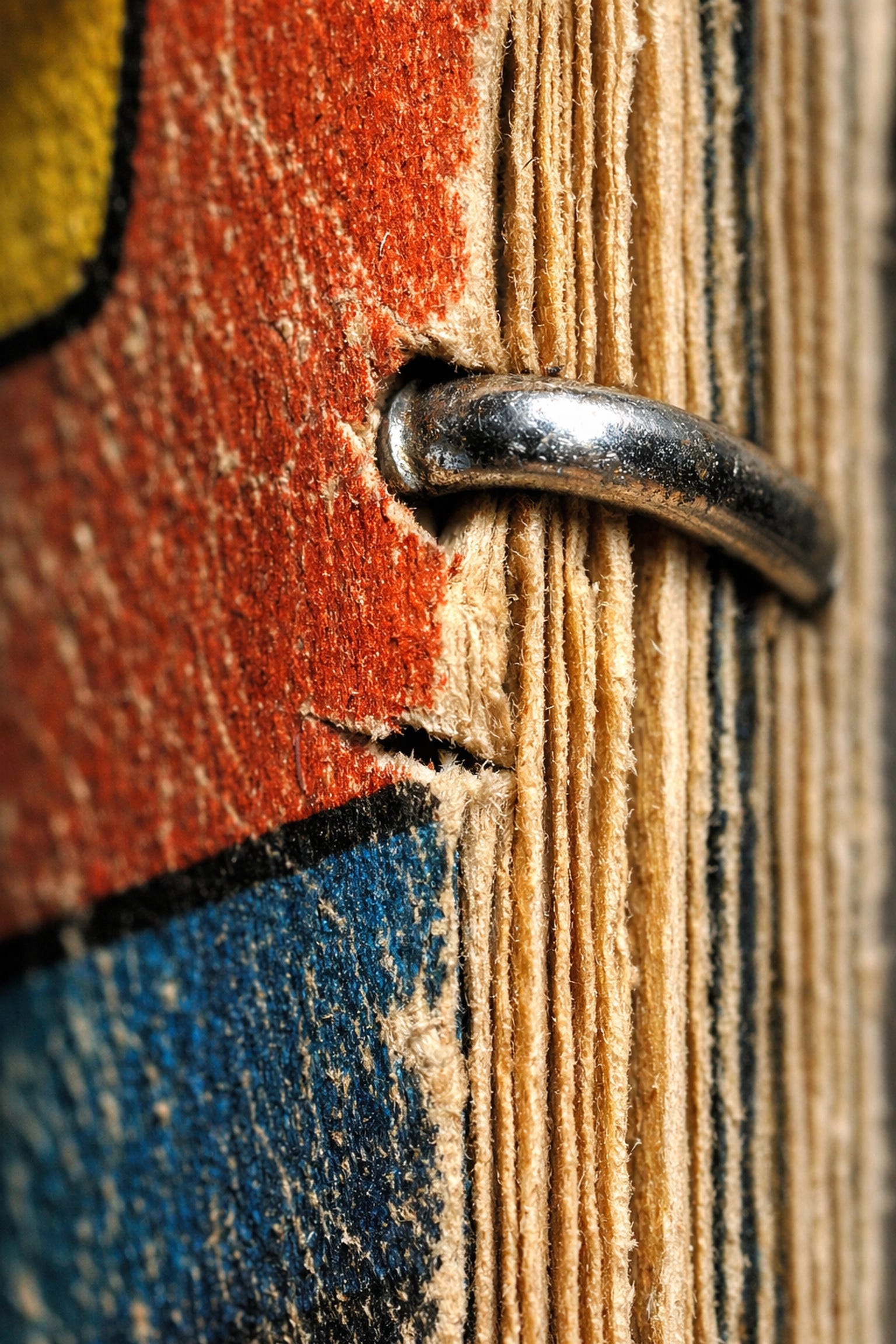
Check the staples. If they are rusty, look at the paper surrounding them. If the rust has started to “bleed” or “migrate” onto the paper, walk away or ask for a massive discount. Rust eats paper over time.
4. Corner Blunting
Are the corners sharp enough to cut paper, or are they rounded and fuzzy? Professional graders love sharp corners.
5. Page Quality
Open the book carefully. Are the pages white, off-white, or “tanned” (brownish)? Tanned pages are brittle. If you turn a page and it feels like it might snap, the book is at the end of its life cycle.
Step 5: Storage and Protection (The “Mike’s” Standard)
If you’re going to buy vintage, you have to protect it. At Mike’s Pics and Flix, we’re big believers in the “Clean and Stored” philosophy. If it’s worth buying, it’s worth a bag and board.
Bags: Use Mylar if you can afford it. It’s archival quality and won’t yellow over time. Polypropylene is okay for cheaper modern books, but for vintage, Mylar is king.
Boards: Always use acid-free boards. They provide the rigidity needed to prevent spine rolls.
Storage: Keep your comics in a “short box” or “long box” in a climate-controlled room. Humidity is the enemy of paper. Never store your comics in a garage or an attic.
Step 6: Buying Smart (Without Losing Your Shirt)
You don’t need to spend thousands to have a great collection. Here is the secret strategy for 2026: Buy the “Mid-Grade” copy.
Everyone wants a Near Mint (9.4+) copy. Because of that, the prices for high-grade books are astronomical. However, a “Very Good” (4.0) or “Fine” (6.0) copy often looks great in a bag and board but costs a fraction of the price.
Pro-Tip: Watch for “lots” on eBay. Dealers often bundle 10-20 “common” issues of a run together. This is the fastest and cheapest way to build the “foundation” of your collection.
If you’re looking for curated, high-quality vintage finds that have been inspected by someone who actually cares about the hobby, check out our latest listings:
Our eBay Store: Mike’s Pics and Flix on eBay
Facebook Marketplace: Find us on FB Marketplace
Final Thoughts
Building a comic collection is a marathon, not a sprint. Take your time. Learn the feel of the paper. Don’t be afraid to ask questions. Every “tick” and “crease” tells a story of a book that was actually read and enjoyed: which is what comics were made for in the first place.
Stay tuned for next week’s post, until then, keep your staples clean and your corners sharp!
: Mike
Mike’s Pics and Flix
wow that was so comprehensive comics were the gateway into real book when I was a kid (and we didn't have tv)